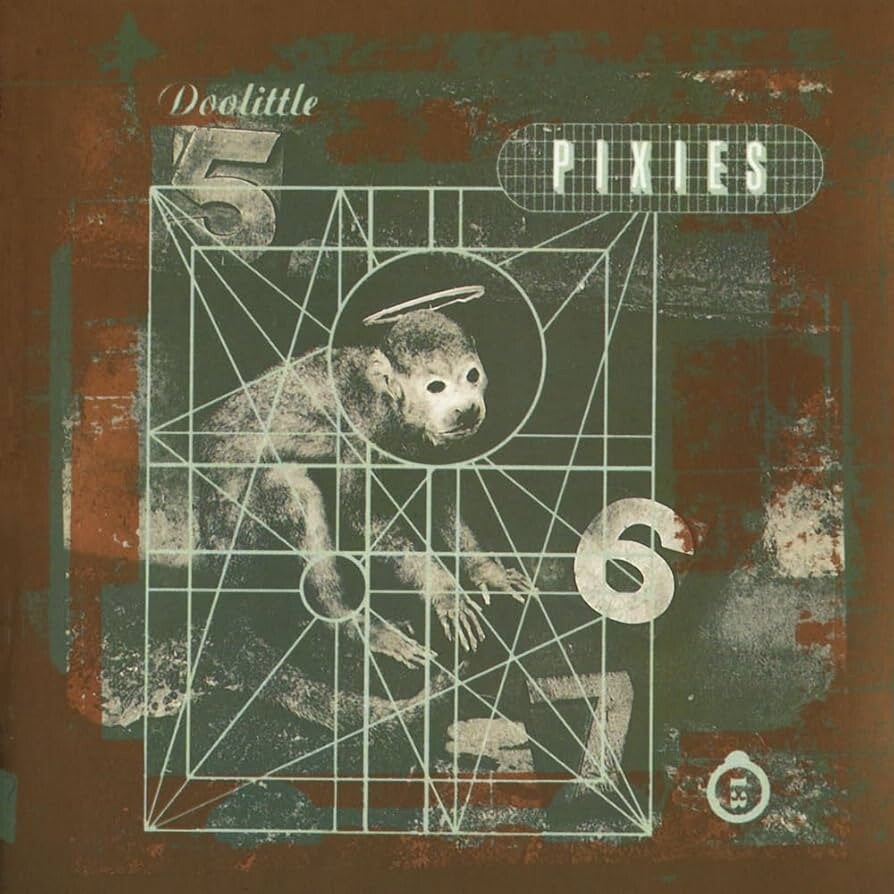
Artifact 3 - Monkeys Gone to Heaven Cover
Recording and Mixing
Why I Chose This Song:
Originally, I had planned to use my Ableton track as my third artifact but since I had so much fun and found a real passion for the process of recording and mixing my Roman Holiday cover that I should use the free time that I have after completing the last cover I should create another one to gain more experience with the recording and mixing process. I chose ‘Monkeys Gone to Heaven’ by Pixies due to its involvement of the cello, an instrument that I think would be great for testing my ability to record musicians external from the college. It is also overall a great song and its individual instrumental components are fantastic.
Planning Stage:
I started the planning process by reading articles that I could find about the recording process of this record and other producers that Pixies have worked with such as the legendary Steve Albini. I managed to find a Sound on Sound article from which the original producer on ‘Monkeys Gone to Heaven’ Gil Norton goes into detail about the recording process of this particular record. Taking notes from this article and others that I read about to achieve the sound I was looking for I was able to create the drum setup I would like. In terms of the other instruments I mostly used the same equipment I used on my previous project and mixed it to my liking in the mixing stage.
In terms of musicians I planned a day that I could get David Macaulay in again to play drums for me, on the same day I was able to get Ollie Fry to play guitar on the track as I know he is a proficient guitarist and with his pedal setup I’d be able to get the correct tone for this cover. For the cello and female vocal recording, I had Laura Findlay as she is a great female vocalist and cellist. For the male vocals I knew I would be able to record them myself as I am more suited for a harsher vocal performance. For all the recordings of musicians external to the college I was easily able to book this for evening sessions in the college.
Recording Process:
Drums
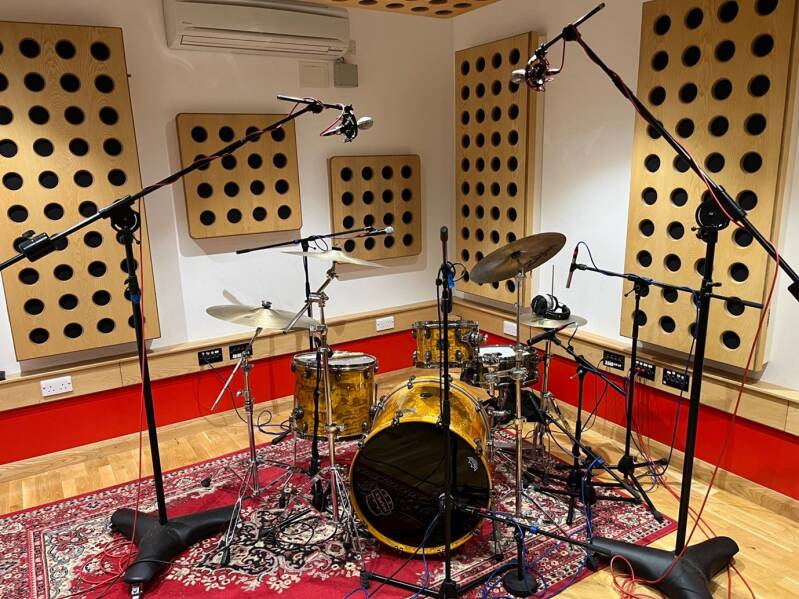
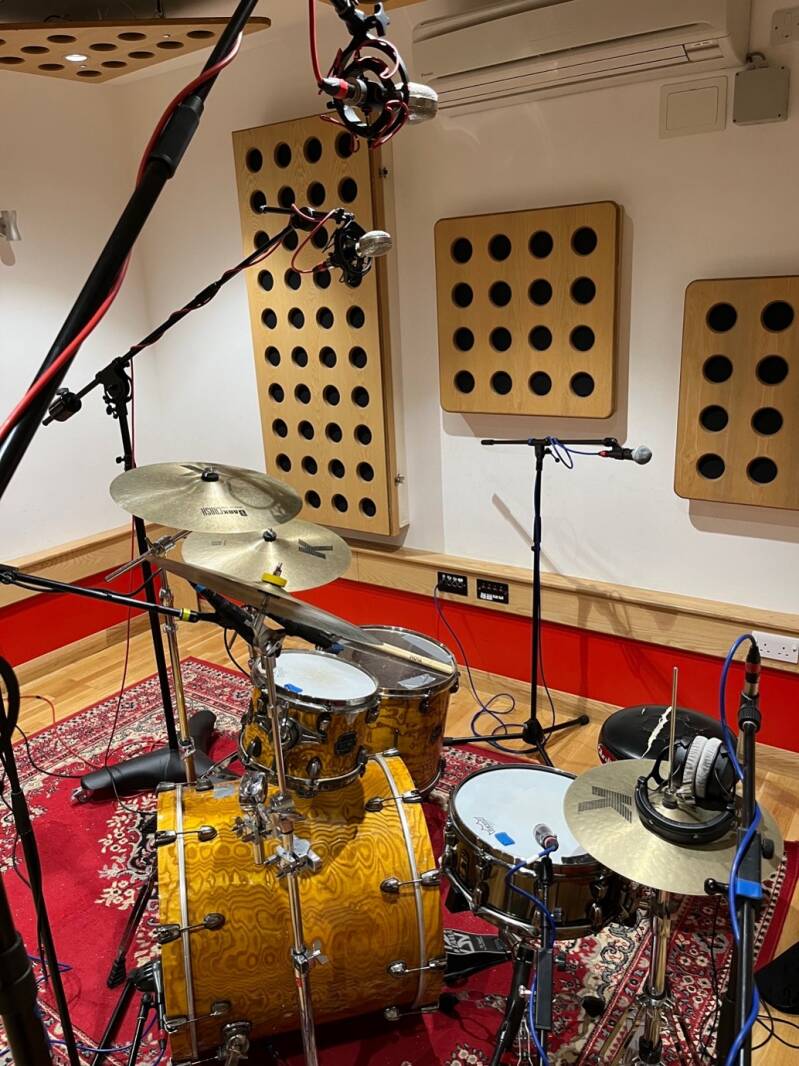
Starting yet again with the drums, the recording took place in the SSL2 studio which was a room that I wasn’t able to have the precise control of the acoustic like what I had with the audient but this had it’s positives as I was able to experiment with a room microphone. The microphone setup for the drums were as follows, Kick drum mic’d with and AKG D112 and a Shure 91a, Snare top and bottom both mic’d with Shure Sm57’s, Hi-hat an AKG 451, the overheads were the microphones that I was most excited about trying out, as I have never recorded with ribbon microphones before so using the Cascade Fat Head II’s was interesting as ribbon microphones figure 8 polar patter allowed me to capture the rooms reflections on the backside while the ‘front’ captured the direct sound from the cymbals creating width for the sound that I’m looking for. For the mono room microphone I used a Neumann TLM 103 and placed it in the short corridor between the room and the second door.
Electric Guitar:
To record the guitar I used a closely miked a Shure SM-57 and a Sennheiser MD421 taped together to ensure that the capsules of the microphones remain at the same distance during recording. The amplifier that I recorded was the Fender Hot Rod. This was the exact same microphone setup as Artifact 1 for the electric guitar so see that page for images.
Bass:
Bass was recorded with a Shure SM-57 on-axis with the speaker cone of the Fender Rumble 100 bass amplifier. I tweaked the tone that I would like, using the tone nobs on the Fender Jazz bass. As this was a solo session I used the re-amp boxes so that I could be in the control room whilst the bass amp would be getting recorded within the live room.
Cello:
Cello was an interesting recording process as it was something that I was not used to listening to or recording unlike guitar or bass.
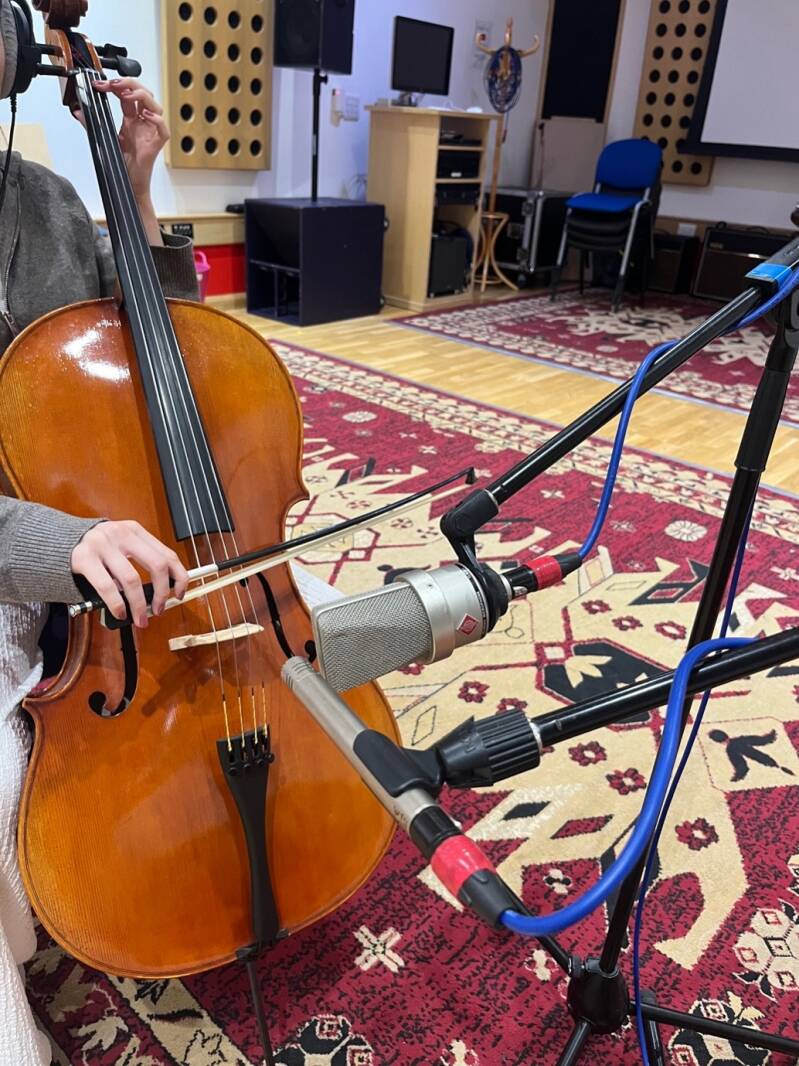
I researched online of ways to record cello and found that Steve Albini had made a video of recording acoustic instruments of which included the cello. I used two microphones so that I would have options in the mixing stage to choose what microphone I liked better out of the AKG 451 and the Neumann TLM103. I chose those microphones as they give me a balance between a large diaphragm condenser and a small diaphragm condenser microphone. I placed them with the diaphragms aligned, pointing to just above the bridge of the cello.
Vocals:
For the vocals, I recorded both the lead male vocal and the female backing vocal separately to ensure I could focus on achieving the correct performance and tone for each part. Laura Findlay recorded the female vocal sections, as her voice closely matched the character of the original recording while also complementing the cello performance she had already provided. I recorded the lead male vocals myself, as the slightly harsher and more aggressive vocal style suited my voice and helped capture the energy of the Pixies’ original performance.
To record the vocals, I used a Neumann TLM 103 paired with a pop filter and vocal reflection filter to minimise room reflections and achieve a clean, dry recording. Multiple takes were recorded for both vocalists, allowing me to select the strongest sections during the mixing stage. I also provided a small amount of reverb in the headphone mix, which helped create a more comfortable recording environment and encouraged a more confident performance from both singers.
Mixing Stage
For the mixing stage I would like to
Drums
Starting with mixing the drums, I organised the kit into their own individual folders and busses for the kick, snare, toms, overheads and room mics. This process allowed me to work on all the components of the kit individually and helps me keep my session tidy, allowing me to work efficiently.
Firstly, working on the kick, I used a combination of SSL EQ and compression to add to the punchiness and control the dynamics. Using the knowledge I gained from my previous cover I was able to focus on balancing the different kick recordings than using a lot of EQ, just slight adjustments.
The snare received the most processing within my kit mix, this is because the snare on Monkeys Gone to Heaven has a very distinct sound that I wanted to create. I applied EQ and compression to increase the presence of the snare and sent it to a spring reverb aux to add some depth. I also used parallel compression to thicken the snare and help keep any dynamics consistent throughout the track. This processing allowed the snare to sound more impactful while remaining consistent within the overall mix without sounding overly compressed.
For the toms I applied some simplistic EQ using an SSL EQ channel strip, I then created a separate aux track for compression and another for reverb. This provided some weight and sustain while helping them sit naturally within the mix. The overheads were processed as a stereo pair to provide the natural image of the kit and provide clarity to the cymbals.
Lastly, I created a bus for the full kit on which I applied some compression along with some saturation. This added to the overall warmth of the kit and helped glue all the individual components of the kit together.
Electric Guitar
I had struggled to achieve a great tone out of the guitars but through trial and error I was able to get a sound that resembled a combination of the original and some of my own ideas. To achieve this sound, I firstly applied some EQ through ProQ, using a bell curve to scoop out some of the harshness that was present. I then used some reverb and delay to create some depth and provide a larger sound for the guitar.
Bass
When recording the bass I made sure to dial in the tone that I knew from the track, listening to the original as pure reference. Since I achieved the tone from the recording process, mostly all this recording required was some light compression and subtle EQ to make it stand out and really drive the track.
Cello
I simply applied some spring reverb to the cello as I loved the raw sound of the instrument but it needed something to help it stand out within the busy mix.
Vocals
As there were many different vocal tracks I had to compress and EQ them all individually, finding what sounded best for each take.
For the more “shouting” loud parts of the vocals I applied some slapback delay and reverb in order to provide the vocal with some body making the voice sound huge. I also applied a lot of reverb to the female vocals as they sounded great with it. As I took many takes of the female vocals I created an “artificial double-track” by simply shuffling the vocal takes and placing them over the original takes, I then bounced them into a stereo pair which created some width.
I believe these vocals really open up the song and sound very powerful.
Create Your Own Website With Webador